
2012 – The Lists
Dec 29, 2012 Advertising, Digital Technology, Movie Industry, Movies, Music, Piracy, TV
As 2012 draws to a close, here’s a round-up of the round-ups, the ‘Best Of’ lists of the media that rocked the world over the past 12 months.
1. YouTube Videos
From South Korea to the outer edges of the planet’s atmosphere, the most-watched YouTube videos of 2012 are a truly global collection. Psy’s Gangnam Style became the most viewed YouTube video of all time, and spawned countless parodies. Felix Baumgartner became the man who fell to earth and garnered the most simultaneous views, from everyone watching his record breaking jump live. And there was KONY 2012, but we’ve forgotten that now.
- YouTube Videos 2012 via the L.A. Times
2. Pirated TV Shows
Game of Thrones topped the list of shows that fans, mostly outside the US, couldn’t wait to see. If the US TV networks could figure out a global subscription model, it seems there’s a lot of money to be made.
- Most Pirated TV Shows via TorrentFreak
3. TV Commercials
Advertising spots around the world continued to straddle the boundary of entertainment and annoyance.
- Best Commercials of 2012 via AdWeek
4. Tweets
Barack Obama’s “Four more years” got more than 810,000 RTs, making it the most retweeted comment of the year. Not even Justin Bieber’s farewell to a dying fan came close.
- 2012 Year on Twitter – via Twitter
5. World-wide Box Office
It was the same-old same-old Hollywood doldrums at the global box office this year, with the Top Ten dominated by superheroes, franchises, and superhero franchises. Audiences across the planet responded enthusiastically to big explosions, car chases, sparkling vampires, archers and talking cartoon animals – just as they always do. Only Brave (at no.11) is an original movie, everything higher up the list is based on pre-existing intellectual property.
- World-Wide Box Office – via Box Office Mojo
6. Documentaries
Documentary movies provide a fascinating measure of cultural temperature: what subjects resonated with both filmmakers and audiences in 2012? From the riches-to-rags down/up comparison afforded by The Queen of Versailles to the injustices exposed by Mea Maxima Culpa: Silence in the House of God to the unique experiences explored in Jiro Dreams of Sushi or The Imposter, 2012 gave us a range of insights into the human condition. I’d also add The Ambassador and Paradise Lost 3 to this list — although they were officially released in 2011 they didn’t reach a wider audience until this year.
- Best Documentaries of 2012 via The Film Stage
Every year, Forbes compiles two lists. One is of the movie stars who deliver the most return per dollar of their asking price, the other details those who return the least. The young stars who dominate the MVP list owe their position to the blockbuster franchises they appear in (for a relatively low payday) rather than their audience-pulling clout. However, with the notion of star power, and the resultant massive paydays, fading into the 1990s in Hollywood, this metric is becoming more and more meaningful.
8. Blogs
Despite the rise of other forms of social media, blogging refuses to die. It’s still the best way for individuals to bypass traditional media – in all its hegemonic glory – and communicate their viewpoint with the world. Whether you’re a Scottish schoolgirl complaining about the quality of your school dinners, a political pundit, an interior designer or a comic book expert, a blog is as vital as it has ever been.
- 25 Best Blogs 2012 via TIME
9. Tumblrs
Sometimes, a blog is TL:DR and a picture is worth a thousand words. That’s where Tumblr rules. Whether the images are of Hillary Clinton, texts from a dog, face math or cats (LOTS of cats) Tumblr is best way of bringing memes to the masses.
- Best Tumblr Nominees 2012 via The FW Awards
10. Music Videos
The migration of the music video from TV to the internet is now complete. Their short length and instant brand identity makes them an ideal media form for viewing on smartphones or tablets. This year, Psy dominated YouTube but Carly Rae Jepsen’s lawnboy lust topped the views on VEVO. This is crazy…
- Most Viewed Music Videos of 2012 – via VEVO
The Blame Game: Violence at the Movies #batman
Jul 20, 2012 Media Effects, Moral Panics, Movie Industry, Movies
As the world’s media try to make sense of last night’s massacre at a movie theatre in Aurora, Colorado, the moral panic begins.
This is a tragedy that has no single cause. Wherever the finger of blame is pointed, the fact remains that 12 innocent people died a shocking death, 50 more were injured, and countless family members and friends will suffer pain and loss. Unfortunately, there was probably no easy way of preventing these murders. Senseless acts of violence are by their very nature unpredictable, without rhyme or reason. We’ve yet to know what caused suspect James Holmes to plan and carry out his attack or if he had a specific target in mind. All we know is that he decided to kill, and with his choice of venue and time, decided to do it in a theatrical, ostentatious way that would link him forever to all the glamour and hype surrounding the release of 2012′s summer box office behemoth, The Dark Knight Rises.
Somehow, Holmes wanted his act of violence to blur and mesh with the violent entertainment on screen, hence his choice of a Bane-esque costume and weapons, and the fight scene within the movie that triggered the launch of his first gas canister. He destroyed the fourth wall, the barrier that’s meant to separate spectator from spectacle, to divide fiction from action. This is a truly disturbing act by an individual. It’s also disturbing on a societal level. It has legal, cultural and moral ramifications that will induce much hand-wringing in the press, social media, and water cooler discourse over the next few weeks. It raises a lot of serious questions that no one will be able to answer about how, as a civilization, violence is our first resort, for thrills, for problem-solving, for driving political agendas.
Occurrence and Signification
The first stage of the moral panic is already well under way. The Dark Knight Rises was already a huge news story, the most-anticipated movie release of 2012. It had been generating the usual hype-related headlines, about budgets, stars, special effects, midnight screenings selling out with lines around the block in some of the worst summer weather North American has ever experienced, effectively a re-run of The Avengers and Hunger Games copy from earlier this year. However, over last weekend, a new kind of story emerged. Things got ugly in the comments section of negative reviews of TDKR. Abuse was hurled at critics who expressed their personal opinion that there were flaws in the movie. Rotten Tomatoes editor, Matt Atchity, took the unusual step of disabling comments to prevent any more rabid fanboy mouth-frothing but the #hate tag had already been attached to the TDKR meta-narrative. The violence of the comments suggested there was an element of hooliganism within the passionate fans who would show up for the midnight screenings – a tiny minority of the tens of thousands who bought tickets, but a significant element nonetheless.
Enter Holmes, who probably hadn’t seen the whole movie before masterminding his attack and cannot be accused of ‘copy-cat violence’ of the type that, for instance, followed in the wake of Natural Born Killers. He does, however, appear to have absorbed crucial information from the movie trailer (deconstructed admirably by Elliott Prasse-Freeman and Sayres Rudy here) about a single gas-masked man threatening a large-scale entertainment event as an expression of class war. The Dark Knight trilogy as a whole has celebrated a lone, caped crusader, whose main superpower is his ability to confront the criminals he pursues in a lawless space, outside the usual moral constraints. Holmes’ violent actions dovetailed all too neatly with TDKR’s aesthetic. It remains to be seen how much he believes he chimed with the movie characters’ (Bruce Wayne or Bane) personal morality.
Wider social implications (fanning the flames)
By choosing a movie theatre in Aurora, CO, Holmes was inserting himself in not just a current news narrative (TDKR) but a long-running one. Aurora is just under 16 miles away from Columbine, the site of another tragic, senseless shooting in April 1999. The wounds caused by Klebold and Harris’s rampage have never healed. While the two events are materially unconnected, their proximity has meant frequent links between the two in this morning’s news reporting. And there are many column inches yet to be filled. Did we learn nothing from Columbine? How could it happen again, so close by? Do Colorado’s lax gun laws make it a hot-spot for mass shootings? Is the economic health of this region a factor? Are local mental health provisions a failure?
Social Control
We’ve long been encouraged to consider public and semi-public spaces (schools, airports, railway stations, government offices) as potential war zones in which carrying a firearm is an act of terrorism. Although we grumble about increased surveillance and security measures, we accept them as a necessary part of doing daily business in 2012. However, the erosion of freedom and anonymity is a one-way street. George Carlin was as prescient as ever in his 1999 stand-up movie, You Are All Diseased:
..if we made airplanes completely safe, the terrorists would simply start bombing other places that are crowded. Porn shops, crack houses, titty bars, and gangbangs. You know, entertainment venues.
Inevitably, last night’s events will make it likely cinema multiplexes will be added to the long list of places where passing through a metal detector is a condition of entry. ‘Additional security’ is already being provided at theaters screening TDKR. “We’re concerned that someone, perhaps seeking notoriety, will attempt to do something similar,” said NYPD head Ray Kelly.
However, the wider discussion about gun control, how an individual like Holm could get hold of such deadly weaponry and ammunition, continues to be a political hot potato, with those calling for more restrictions shouted down by gun enthusiasts citing their Second Amendment right to bear arms. In an election year, neither presidential candidate wants to alienate voters by threatening their constitutional freedoms. They avoid addressing the question that one individual’s legally enshrined right to purchase an automatic weapon threatens the freedom of hundreds of others to enjoy a movie in peace and safety. A society where people live in constant fear of attack by a lone, insane gunman is hardly a democracy.
The other social control that will be discussed, but not implemented, is mental health care. Like so many lone gunmen before him, Holmes has already been identified as a quiet drop-out whose last regular links with society (i.e. university attendance) were recently severed. His actions yesterday evening, dressing and arming himself, leaving a booby-trapped apartment, and driving to the multiplex with murder on his mind, speak to a severe mental illness. Although he clearly made plans, they didn’t include eluding capture. He must have been so disconnected from the people around him that no one noticed his state of mind, and he felt there was no one he could approach for help, or to warn them that he was feeling the urge to act on some dangerous impulses. Modern city living isn’t geared to awareness of those around us. Even if you are aware that something is “off” with a neighbor, there’s nowhere to go for help. Many, many people fall through the cracks on a daily basis, and no one notices or cares unless their mental breakdown manifests in tragedy. PhD student Holmes certainly engineered his breakdown so that it would have maximum media impact, reminding us all that in the great chain of society we are collectively only as strong and as safe as our weakest links.
Top Illegally Downloaded Movies 2011
Dec 30, 2011 Digital Technology, Movie Industry, Movies, Piracy
It seems Paul Walker still has what it takes. But no wonder the studios are pissed off about piracy. Let’s do the math.
Box Office Mojo works with an average per ticket price of $7.96 for 2011 (although I usually pay twice that). I’ve included the revenue discrepancy if everyone who downloaded had instead bought a ticket at a theater for that price – although I know some of these pirates might have rented or bought the DVD instead.
1. Fast Five – 9.2m downloads ($73.23M of lost ticket sales)
2. The Hangover II – 8.8m downloads ($70.05M of lost ticket sales)
3. Thor – 8.3m downloads ($66.07M of lost ticket sales)
4. Source Code – 7.9m downloads ($62.88M of lost ticket sales)
5. I Am Number Four – 7.6m downloads ($60.5M of lost ticket sales)
6. Sucker Punch – 7.2m downloads ($57.3M of lost ticket sales)
7. 127 Hours – 6.9m downloads ($55M of lost ticket sales)
8. Rango – 6.4m downloads ($51M of lost ticket sales)
9. The King’s Speech – 6.2m downloads ($49.4M of lost ticket sales)
10. Harry Potter and the Deathly Hallows: Part 2 – 6m downloads ($47.76M of lost ticket sales)
For a movie like Sucker Punch, which managed a worldwide gross of only $89.8M, these numbers must be particularly galling. If everyone who downloaded the movie had actually bought a ticket instead, then it might have been considered a middling success, rather than a dismal failure. The same goes for Source Code, which barely scraped $55M as a domestic gross, and could certainly have used an extra $62.88M in its final tally.
The money lost on each one of these movies, had it gone to the studios, would have funded a mid-budget movie (and employed hundreds of people). So, next time you go to the multiplex and wonder where all the “missing” movies are, the non-sequels, the non-remakes, the non-adaptations, this is what happened: pirates ate them.
The Guardian has the full breakdown.
The People vs. Drive: Is Bad Marketing A Crime?
Oct 10, 2011 masculinity, Media Effects, Movie Industry, Movies
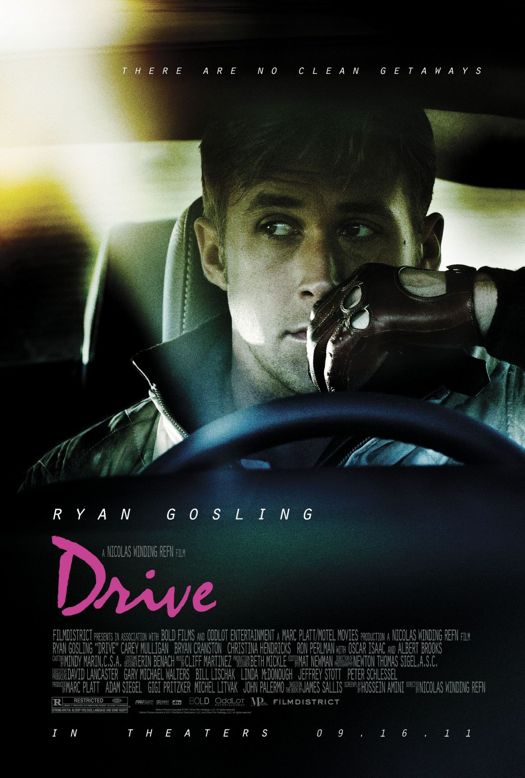
Michigan resident, Sarah Deming, is suing her local multiplex and the distributors of Ryan Gosling-starrer Drive.
Deming says the movie was promoted “as very similar to the Fast and Furious, or similar, series of movies” but actually “bore very little similarity to a chase or race action film, having very little driving in the motion picture”. She also claims that
“Drive was a motion picture that substantially contained extreme gratuitous defamatory dehumanizing racism directed against members of the Jewish faith, and thereby promoted criminal violence against members of the Jewish faith”
and hopes that anyone who feels the same way will join her in a class-action suit. She’s seeking the price of her ticket and further damages.
There have been many rumblings about the way Drive was marketed prior to this lawsuit. The movie itself doesn’t have any identity problems. It’s an extremely violent, Euro arthouse flick from beginning to end. However, it was shot within the Hollywood system and contains many Hollywood stars – who all love to play against type given the opportunity – and has to earn its nut at the box office. This always creates a headache for the marketing department who have to ask “How do we reach the biggest possible audience for this movie?” rather than “Who is the best audience for this movie?”.
Thomas Rogers, movie critic and editor at Salon.com, was
“…fascinated by the target demographic of the movie — like, who’s supposed to see it in the first place? There are people who are going to see it because of Ryan Gosling, but I feel like the normal Ryan Gosling audience isn’t all that fond of seeing someone stomp people to death. The movie has these gay movie references — mostly to Kenneth Anger’s underground film “Scorpio Rising” — but there’s really nothing overtly gay about it. The title sequence has this campy 1980s lettering, which is duplicated in the film’s ad campaign — and a hilarious, awesome fake-’80s synth score — which makes it seem like it might have a romance or comedy element to it. But the film’s only sex scene involves two people touching a stick shift, and there’s probably only one joke in it. I think, basically, this movie manages to frustrate everybody’s expectations of it — to its great credit.
By attempting to broaden the target audience (including Ryan Gosling fans, Fast and Furious Fans, crime caper fans, even Mad Men fans thanks to the presence of Christina Hendricks) the studio ended up disappointing a lot of people and generating some horrible word of mouth. That’s the kiss of death in today’s Twitter-driven marketplace. And now it’s generated a lawsuit.
Whether Deming’s case ultimately gets dismissed as frivolous, or settled out of court just so it will go away, remains to be seen. However, it does raise some interesting issues about what audiences feel they are being duped into by the Hollywood machine.
For decades, movie trailers have attempted to make bad acting and story-telling look palatable, cherry-picking the six good moments from an absolute bomb in order to lure an audience into going to see it. Is this artistic licence, or classic bait-and-switch? Do movie-goers have a duty to inform themselves about the actual content of a film (Sarah Deming could have saved herself a lot of time and trouble by reading some of the advance reviews of Drive online) or do they have a right to expect that the general marketing honestly represents what they are about to see?
Are US audiences so infantilised by the constant stream of superheroes and aliens and fighting robots that they are unable to deal with human-on-human violence as part of a fictional story? The Italian poster for Drive (see right) makes no bones about the tone of the movie. Like the US version (top), it features Ryan Gosling, but shows him striding purposefully along a dark road, (bloodstained?) hammer in hand, murder in his eyes, NOT looking dreamy behind a wheel. Was this so unacceptable to Gosling fans entranced by his recent performance in Crazy, Stupid, Love? Was it fair to lure them into watching Drive anyway?
The furore also raises questions about why the kind of easy, casual violence and prejudice that runs rampant in summer blockbusters is acceptable to mainstream US audiences, whereas the one-on-one gritty and realistic violence depicted in Drive is not. The body count of Transformers: Dark of the Moon was way higher than Drive‘s, but Michael Bay glosses over deaths as collateral damage, the inevitable consequence of a thrilling action scene, nothing anyone in the audience has to deal with emotionally or viscerally. The potentially negative impact of the racism represented by Mudflaps and Skids in Transformers 2 far surpasses any of the anti-semitic snarls of the hoods in Drive (clue: one movie is aimed at children still forming their view of the world, one is not).
No one’s bringing a class action suit against Michael Bay and his corporate paymasters, Hasbro and Paramount. Perhaps Deming and her attorneys should be litigating against more culpable targets?
Watch the Drive trailer for yourself:
The Drive Backlash: Too violent, too arty or both? – Salon
Detroit Woman Sues “Drive” Film-makers- Click On Detroit
My “Drive” review – Planet Fury
Shriekfest: why low budget horror matters
Oct 4, 2011 Horror, Movie Industry, Movies
The first weekend in October is always one of my favorites in the year. It’s Shriekfest, three days of low (and micro) budget horror features and shorts, with plenty of heated genre discussions between screenings at the Raleigh Studios. And this year there was a great food truck on site.
Shriekfest showcases the kind of movies that will never make it to local multiplex screens. They’re usually labours of love, funded personally and piecemeal. Most focus on a single location, with a limited number of characters, and are shot on a really tight schedule. Whatever budget there is (and that’s often less than $100K for a feature) is mostly thrown at practical special effects – this is horror, after all, and the stories demand buckets and buckets of blood. These are the kind of constraints that inspire genuine creativity. There are no easy answers or quick cash fixes. Film-makers are dealing with raw story and only the most basic of film-making tools in order to communicate with their audience. The resulting entertainment puts big budget studio movies to shame.
The 2011 program included vast numbers of highly entertaining – and slick – shorts, as well as some stand-out features. My personal highlights included:
The Moleman of Belmont Avenue, a horror comedy, follows the misadventures of bumbling brothers, Marion and Jarmon Mugg, as they attempt to eradicate a basement-dwelling pest from the apartment building they inherited from their mother. A sharp and inventive script, two excellent central performances (from John LaFlamboy and Mike Bradecich), and a lively supporting cast (including Robert Englund) make this a gem from beginning to end.
Isle of Dogs, a stylized and bloody tale of revenge, won the Best Thriller award. The narrative starts out as a typical gangster flick, all about testosterone and disputed women, but it spirals upwards into Jacobean tragedy. Barbara Nedeljakova (Hostel), Edward Hogg (Bunny and the Bull) and Andrew Howard (I Spit On Your Grave, Limitless) relish the material and deliver dynamic performances from the top all the way through to the blood-soaked, Grand Guignol climax.
Best Horror Feature went to Absentia, a low budget but nonetheless chilling supernatural thriller. This tale of two sisters in suburban Los Angeles provides a great example of a simple story simply told. The horror derives from the modern mundane – a pedestrian tunnel under the freeway – but incorporates myths from many different cultures in order to tap into the audience’s primal fears.
In the current climate of remakes, rehashes and plain ol’ regurgitation spewed out of Hollywood by the studio machine, it’s always refreshing to be reminded that there are film-makers out there with the ability to tell an original story in a fresh way – and spend less than most studio movies’ catering budgets in the process. Kudos to Shriekfest for bringing the best of independent horror to a wider audience.
2011 Summer Box Office Review
Sep 5, 2011 Advertising, Movie Industry, Movies
The numbers are in: overall box office receipts are up, thanks to higher 3-D ticket prices, but actual attendance in North America is down to its lowest levels since 1997. This is the fourth year of decline.
It’s the usual picture, a few big hits (Harry Potter 8, Bridesmaids, Fast Five) compensate for the massive, expensive flops (Green Lantern, Cowboys and Aliens), and studio honchos express surprise that adult audiences turned out in droves for Midnight In Paris and The Help.
Ad Age provides a helpful round up of studios’ performance, with a quick assessment of how important marketing was to success or failure.
Ad Age’s Second Annual Summer-Movie Report Card- Ad Age
The New York Times crunches some of those numbers and they don’t make happy reading for anyone who has stock in a studio. Even a $1BN+ hit like Pirates of the Caribbean 4: On Stranger Tides, doesn’t generate that much profit, once the theater chains have received their cut (usually about 50% of takings).
Summer Movie Attendance Continues to Erode- NY Times
It looks like the 3-D bubble has burst (again), with 3-D shoots cancelled to save costs, so where will that leave takings this time next year?
“This Summer”, “Epic Battle”,”A Love That Will Stand the Test Of Time” etc: the art of the movie trailer
Aug 2, 2011 Advertising, Movie Industry, Movies
Thanks to YouTube, movie trailers are no longer ephemera, glimpsed on TV over a couple of weeks then relegated to the Special Features section on the eventual DVD release. Trailers have always been a cornerstone of any movie marketing campaign, but now they’re analysed, angsted over and recut almost as much as the movie they’re promoting. Trailers for a tentpole release start appearing online up to a year before the actual movie appears, and now they stay online, forever a testament to what the studio hoped people would think the movie was about.
The Independent profiles the format today:
The trailer came into being in 1913 when the Loews Cinemas company created one for the musical, The Pleasure Seekers, which was playing on Broadway. But the early days of trailers were usually maladroit and audiences immediately knew they were being sold something. The Bishop’s Wife in 1947 gave a knowing nod to such tactics with a self-referencing trailer staring David Niven and Cary Grant on their way to film a promo for the movie.
Until the 1950s, American trailers were produced by the National Screen Service, although some directors such as Alfred Hitchcock and John Ford liked to produce their own. In the 1960s film directors took a keener interest, leading to more stylish trailers. Plot spoilers in trailers still existed into the 1970s although trailers were less brash than today. “This is Universal’s extraordinary motion picture version of Peter Benchley’s best-selling novel, Jaws,” intoned the gentle voiceover on a trailer for Speilberg’s shark fest which, during its three minutes, showed so much footage and dialogue, it was akin to an abridged version of the film.
By the 1980s, trailers were more vague and teasing. Today, producers of trailers understand they are not selling a narrative but an abstract representation of one. They tend to make films seem like an offering (“the producers of Film X bring you…”) and they stick to strict time limits of two minutes and 30 seconds as laid down by the Motion Picture Association of America.
While a good trailer can make a bad film seem awesome (at least until the first audiences start tweeting their opinions on their way out of the theater), a bad trailer can be an expensive mistake that takes many months to put right in terms of advance word.
And of course, there’s a well-established set of clichés…
The science of the trailer- The Independent
Are studio movies pricing themselves out of the market?
Jul 28, 2011 Movie Industry, Movies
“Is there any reason The Hangover II needed to cost more than twice what The Godfather did?”
After recent grumbles about the flood of superhero movies giving a very poor bang for their buck, Cord Jefferson at Good does some number crunching on what some of the greatest movies of all time would cost if they were made today, and how that compares to current box office fodder.
The best movie of all time, according to IMDB users, is the critically acclaimed The Shawshank Redemption. In 1994 it cost $25 million to produce, but even in 2010 dollars that’s only $36.2 million, almost $30 million less than the average film now. The Godfather, IMDB’s second-best movie of all time, cost $31 million in 2010 bucks. Once again, that’s much less than the average movie nowadays. In fact, save for Inception and The Dark Knight, numbers nine and 10 on the list, respectively, every single one of IMDB’s top 10 movies cost less to produce than the average current film, some by leaps and bounds. Pulp Fiction’s budget was $11.6 million when adjusted for inflation, and Schindler’s List, a hugely important film, only cost $37 million.
These numbers represent a fraction of the costs of hit movies from 2010-11. While there will always be expensive, SFX-driven blockbusters (the top earning movie of the year so far is Transformers 3, which had a production budget of $195M), it seems that the studios can’t even churn out a character-driven drama or comedy for less than those top two movies of all time. The Hangover II cost $80M. The Adjustment Bureau cost $50M. The horrible The Dilemma cost an eye-popping $70M (for what?). Add to these figures the marketing costs (which for big movies usually constitutes a sum at least equal to the production budget, if not higher), and that means that studios are routinely pumping out movies that won’t make their nut until they put the $100M box office mark a long way behind them.
These expensive movies translate directly into high ticket prices for moviegoers, and a studio system that’s reluctant to punt even relatively modest budgets (less than $20M) on original ideas. The only thing that will change this costly culture is concerted action on the part of audiences, as Jefferson suggests.
maybe it’s best in the long run for everyone to agree to stop going to movies in the theater. Let’s all stay home, watch Netflix and Hulu, and thus help whittle away at the film companies’ coffers more than people already have. When the studios can no longer pay to make every film a $70 million undertaking, perhaps then they’ll get back to doing what real filmmakers have been doing for as long as cinema has existed: Making more with less. When that happens, not only will we be able to afford the ticket, we’ll actually want to see the movie.
How the Film Industry’s Big Budgets Are Killing Movie Theaters-Good
Death of the Movie Superhero?
Jul 21, 2011 Comics, Movie Industry, Movies
For a while now superhero movies have been a valuable cash cow for the studios, supplying familiar stories with built in brand recognition and a global audience. However, it turns out that audiences can’t be fed entirely on a diet of rehashed comic books, largely because they all start to look the same. And we’ve seen a glut of them this year, with less than spectacular box office results once you factor in production and P&A costs.
Deadline comments on media analyst Vasily Karasyov’s report this morning:
The analyst says that the boom in superhero movies began around 2000 as computer generated imagery (CGI) made it easier for filmmakers to credibly show action that defies the laws of physics. Virtually all of the most popular films of the last decade couldn’t have been made without CGI. Within that group Karasyov counts 16 superhero films, not counting sequels, resulting in four franchises: Fox’s X-Men, Sony’s Spider-Man, Warner Bros’ Batman, and Paramount’s Iron Man. Yet nothing has taken off since Iron Man came out in 2008, he says, largely because studios have already tapped their hottest properties. “As film studios dig deeper into catalogues for characters for new films, we think the chances of finding a break out property are diminishing fast” — even though the films still come with high production costs.
Harry Potter is done. Twilight has the two final instalments already in the can. Where should Hollywood studios look for the next lucrative franchise?
Studios Should Prepare for the Death of Superheroes- Deadline
History Repeats Itself
May 30, 2011 Digital Technology, Movie Industry
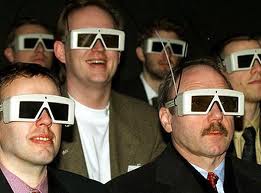
It seems the latest 3-D movie boom is over, and with it the boost to box office receipts that Hollywood was counting on to bolster their income against falling video rentals and DVD sales. The same rejection of 3-D happened the first time the technology was introduced in the 1950s, and again with the brief flowering of 3-D in the 1980s, with audiences getting tired of wearing the glasses (or not being able to wear them if you’re colour blind), and paying extra for tickets for 3-D movies.
In 2011, audiences have started to buy tickets for “flat” (or 2-D) versions of the big movies being released in 3-D. Whether this is because they baulk at the price of tickets (which can be anything up to $20), or because they prefer watching movies with a traditional depth of field is not known. However, the numbers are clear:
Ripples of fear spread across Hollywood last week after “Pirates of the Caribbean: On Stranger Tides,” which cost Walt Disney Studios an estimated $400 million to make and market, did poor 3-D business in North America. While event movies have typically done 60 percent of their business in 3-D, “Stranger Tides” sold just 47 percent in 3-D. “The American consumer is rejecting 3-D,” Richard Greenfield, an analyst at the financial services company BTIG, wrote of the “Stranger Tides” results.
One movie does not make a trend, but the Memorial Day weekend did not give studio chiefs much comfort in the 3-D department. “Kung Fu Panda 2,” a Paramount Pictures release of a DreamWorks Animation film, sold $53.8 million in tickets from Thursday to Sunday, a soft total, and 3-D was 45 percent of the business, according to Paramount.
3-D (or stereo vision) has been around since 1894, so it’s not going to disappear anytime soon. However, as happened in the 1950s and the 1980s, many of the movies currently being shot in 3-D may only ever see a 2-D theatrical release. Will we lose a classic 3-D experience because of this? Hitchcock shot Dial M For Murder in 3-D in 1954, and included some sophisticated and innovative use of the technology, especially in the scenes with Grace Kelly wielding a pair of scissors that bring a whole new level of tension to the narrative. Unfortunately, this came at the end of the 3-D boom, and the move was eventually released as 2-D (although there are occasional screenings held of rare prints of the 3-D version).
Will the studios keep pushing 3-D onto audiences? This time, 3-D TV has a part to play, as those who have invested in 3-D sets will demand content to justify their investment. However, the signs are that 3-D 2010s style is just as much of a short-lived gimmick as its predecessors, until the next Avatar comes round to spark interest in the format once more.
3-D Starts to FIzzle, and Hollywood Frets – New York Times
A history of 3-D cinema – The Guardian